.avif)
Hospitality Jobs London: Guide to Securing Career Capital in 2026
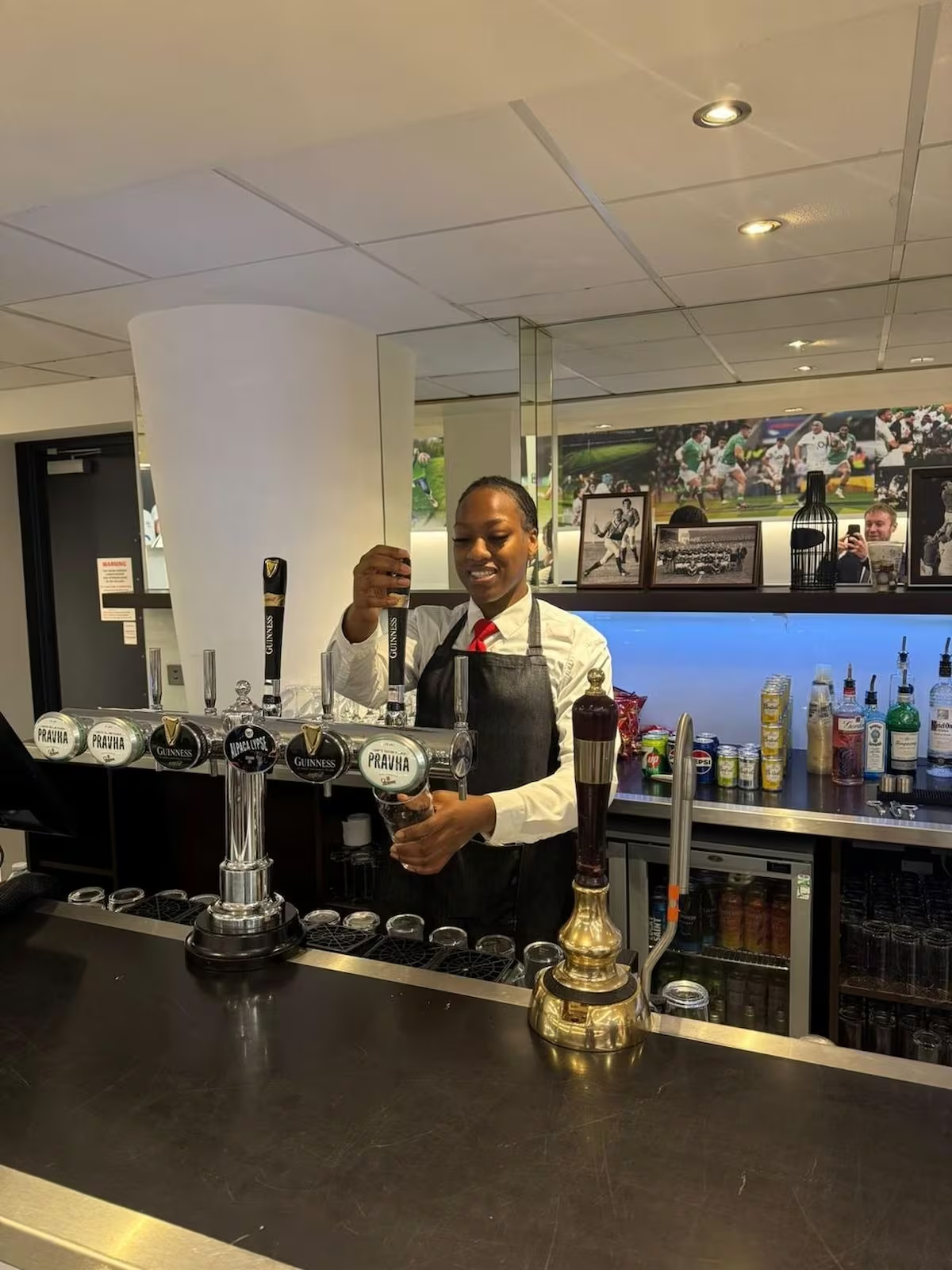
Securing the finest hospitality jobs London has to offer requires a strategic approach to CV optimisation, mastery of modern point-of-sale systems, and a clear understanding of complex payment structures like tronc schemes.
In May 2026, London's premium hospitality circuit remains a powerhouse of opportunity, boasting over 6,500 active roles across luxury hotels, Michelin-starred restaurants, and elite event spaces. To stand out and command top-tier hourly rates, ambitious talent must look beyond standard job boards, focusing instead on elite talent curation networks, targeted direct applications, and professional certifications that unlock maximum earning potential.
The contemporary culinary and guest-experience landscape across Greater London demands more than just basic customer service. It requires a commitment to building genuine career capital. Whether your goal is to curate flawless experiences as part of our elite hospitality network, or to master corporate operations, navigating this competitive arena requires insider knowledge.
This comprehensive guide serves as your strategic roadmap to finding, winning, and thriving in the most prestigious hospitality environments across the capital.
Overview of the Hospitality Industry in London
London’s hospitality sector encompasses an extraordinary diversity of deployment opportunities, spanning iconic heritage hotels, cutting-edge corporate institutions, and high-profile event venues. As we progress through May 2026, the marketplace presents a fascinating dynamic: operators are balancing ambitious growth trajectories against persistent macro-economic cost pressures and shifting consumer behaviours. For ambitious professionals, this environment creates a premium on elite talent who can seamlessly merge operational efficiency with exceptional emotional intelligence.
Key Hospitality Sectors
The premium employment market in the capital is broadly categorised into distinct operational sectors, each requiring a specific blend of technical execution and interpersonal flair:
- Front of House (FOH): The literal face of the brand. This includes immaculate receptionists, intuitive concierges, expert waiting staff, and the highly skilled hospitality and event bar staff who define the atmosphere of London's finest venues.
- Back of House (BOH): The operational engine room. This encompasses elite culinary roles from meticulous commis chefs and chefs de partie up to visionary head chefs, alongside crucial housekeeping and facilities management specialists.
- Management and Supervision: The strategic layer. Roles here include general managers, restaurant supervisors, and corporate event coordinators who oversee complex budgets, regulatory compliance, and team orchestration.
- Specialised Guest Services: Niche disciplines including sommeliers, hospitality technology consultants, and elite conference hosts and delegate staff tasked with managing high-stakes corporate interactions.
Recent Trends and Developments in 2026
The contemporary landscape is defined by a flight to quality. With thousands of active vacancies updated daily across specialised platforms, the traditional, transactional recruitment model has evolved. Forward-thinking organisations no longer look for temporary "staff"; instead, they focus on curating exceptional individuals who treat guest experience as a fine art.
Crucially, employers are facing persistent talent shortages in skilled kitchen positions and experienced operational management. This has driven a significant shift in corporate philosophy: leading brands are heavily investing in robust internal development pathways and offering highly competitive compensation packages to attract top-tier talent. Concurrently, digital proficiency has become completely non-negotiable, with the industry fully integrating advanced reservation ecosystems, predictive staffing algorithms, and touchless payment architectures into daily operations.
Economic Impact on the City
The hospitality sector remains one of the primary engines of the London economy, serving as a vital employment generator across every borough from the vibrant West End to the bustling corporate hubs of the City and Canary Wharf. The health of this industry directly impacts an extensive supply chain, including premium artisanal food producers, global beverage distributors, and corporate logistics providers. Furthermore, the sector plays a pivotal role in maintaining London's status as the world’s premier destination for international tourism and high-value corporate dealmaking.
Types of Roles Available
Finding the right fit within the ecosystem of hospitality jobs London provides requires analysing where your unique talents intersect with commercial demand. The opportunities are vast, ranging from flexible, high-energy event deployments to permanent, executive career paths.
Front of House Positions
Front of House roles demand exceptional charisma, cultural agility, and the ability to perform flawlessly under pressure. In Central London's thriving coffee and cocktail circuits, skilled baristas and mixologists are highly sought after, with premium venues competing fiercely for individuals who possess deep product knowledge.
Similarly, fine-dining servers and luxury hotel receptionists must act as brand ambassadors, balancing rapid service delivery with genuine warmth. For those balancing academic pursuits or alternative creative projects, discovering high-value, flexible opportunities via our platform allows talent to choose elite deployments that actively enhance their professional profiles.
Back of House Roles
The culinary heart of the capital relies entirely on the technical precision of its Back of House teams. Chefs de partie and sous chefs across London are expected to maintain immaculate standards of portion control, ingredient provenance, and plating aesthetic.
Behind the scenes, housekeeping executives and kitchen porters implement rigorous safety and hygiene protocols that form the bedrock of any premium establishment's reputation. These roles offer profound satisfaction for individuals who thrive on structure, teamwork, and the measurable pursuit of operational perfection.
Management and Supervisory Jobs
Supervisory and management positions represent the ultimate step up for those looking to convert raw experience into long-term career capital. As a shift supervisor or assistant manager, you are directly responsible for mentoring junior teams, managing fast-moving service flows, and resolving guest complaints with absolute diplomacy.
At the macro level, general managers and event directors handle complex supplier relationships, labour cost margins, and brand compliance, making these roles some of the most lucrative and strategically significant in the capital.
Specialised Hospitality Careers
The evolution of modern corporate events has driven immense demand for specialised talent capable of executing complex, multi-day functions. If your interests lie at the intersection of corporate hospitality and logistics, exploring targeted opportunities as conference exhibition promo box office staff can open doors to massive corporate networks. Furthermore, business development managers, revenue managers, and corporate account directors are increasingly required to help traditional hospitality groups expand their footprints into the healthcare, technology, and private equity sectors.
Skills and Qualifications Employers Seek
To secure the most prestigious hospitality jobs London has to offer, candidates must present a balanced portfolio of highly refined interpersonal attributes, mandatory compliance qualifications, and sharp technical competencies.
Essential Soft Skills
While technical tasks can be taught, emotional intelligence is the true currency of premium service. Employers look for specific core attributes:
- Dynamic Communication: The ability to alter your linguistic tone seamlessly, whether conversing with an international corporate delegate, an internal kitchen team, or a high-net-worth VIP.
- Anticipatory Service Delivery: Moving beyond reactive customer service to actively predict guest requirements before they are explicitly vocalised.
- Radical Adaptability: Maintaining flawless composure and problem-solving efficiency when a major booking alters at the last minute or a complex technical system encounters an error.
- Collaborative Synchronicity: Recognising that a premium service environment functions like an orchestra, requiring total alignment between FOH charm and BOH speed.
Industry Certifications
To fast-track your application into elite brackets, certain credentials are vital. A Level 2 Food Safety and Hygiene certification is standard for any role involving food handling.
For those looking to step into supervisory positions within premium bars or hotels, holding the BIIAB Level 2 Award for Personal Licence Holders is an immense competitive advantage, as it legally empowers you to authorise alcohol sales. Additionally, completing recognised Allergen Awareness and mental health first aid training signals to employers that you are a responsible, modern professional ready for leadership.
Technical Competencies
The modern hospitality environment is heavily digitised. Candidates are expected to seamlessly navigate advanced cloud-based Point of Sale (POS) systems such as Lightspeed, Toast, or Square, alongside sophisticated guest-list and reservation platforms like OpenTable and Resy. For culinary professionals, mastery of specialised kitchen equipment, precision knife work, and rigorous adherence to standard recipe metrics are crucial. Front of House professionals must also possess sharp mental arithmetic and data-entry skills to process multi-currency payments and manage complex corporate billing accurately.
Finding Vacancies in the City
Unlocking the highest-tier hospitality jobs London hosts requires a multi-layered search strategy that blends cutting-edge digital curation with proactive, face-to-face networking.
Job Portals and Recruitment Agencies
While generic job engines offer sheer volume, ambitious professionals achieve better results by utilising specialised channels. Platforms like Reed, CityJobs, and Leisurejobs offer targeted filtering by specific London boroughs, salary brackets, and shift patterns.
For those looking to partner with specialised agencies to access exclusive corporate calendars, registering via our find work portal connects you directly with premium brand partners. These curated placements ensure that your talent is matched with environments that actively respect and reward your skills.
Networking and Referrals
In the close-knit London luxury circuit, who you know frequently dictates where you deploy. Attending industry trade shows, hospitality exhibitions, and specialised corporate events is an exceptional way to build organic connections with operations directors.
LinkedIn remains a highly effective digital tool for this; engaging thoughtfully with content posted by London restaurant groups and hotel managers can position you directly in front of key decision-makers. It is well established that sociable grads are good for business, as their natural networking capabilities frequently unlock unadvertised luxury roles through internal employee referral schemes.
Direct Applications to Employers
Never underestimate the power of structured, direct outreach. Identify the top ten establishments that align perfectly with your career aspirations and submit highly tailored applications straight to their talent acquisition teams.
If you choose to drop off a CV in person, timing is everything: always visit during quiet operational windows, typically between 15:00 and 17:00 on a Tuesday or Wednesday. Ensure you are immaculately presented and ask to speak briefly with the general manager or front of house director to express your passion for their brand.
Application and Interview Guidance
To secure a premium position, your application materials and interview performance must reflect the absolute pinnacle of professionalism.
Crafting a Standout CV
Your CV should not be a passive list of historical duties; it must be a dynamic testament to the value you create. Focus heavily on quantifiable achievements and technical proficiencies.
Instead of writing "responsible for taking orders," optimise your prose to read: "Orchestrated high-volume service delivery across a 120-cover premium dining room, consistently optimising table turnover rates by 15% while maintaining flawless guest satisfaction scores."
Ensure your CV adheres to this clear structural template:
- Professional Profile: A sharp, high-energy three-sentence summary detailing your experience, core values, and what you aim to achieve.
- Right-to-Work Status: Explicitly state your UK working eligibility right at the top to accelerate human resources processing.
- Chronological Experience: Detail your previous roles in reverse order, highlighting specific POS platforms mastered, event volumes managed, and culinary styles delivered.
- Qualifications & Certifications: Clearly list your food hygiene credentials, personal licences, and degree details.
- Verified References: Provide contact information for respected industry mentors who can validate your work ethic.
Keep the layout clean, elegant, and strictly limited to two pages.
Preparing for Hospitality Interviews
Preparation is your shield against anxiety. Thoroughly analyse the target venue's digital footprint, read recent critic reviews, and immerse yourself in their menu concept.
When interviewing for elite roles, expect competency-based questions that require you to deploy the STAR methodology (Situation, Task, Action, Result). Be ready with clear examples of how you have defused an intense customer complaint, managed a sudden inventory shortfall, or supported a teammate during an unexpectedly hectic shift.
For advanced culinary and premium cocktail roles, be prepared to undertake a trial shift. Approach the trial as a live performance: demonstrate intense focus, maintain immaculate personal workspace hygiene, communicate with absolute clarity, and show an eager willingness to support the existing team.
Opportunities for Career Progression
The true beauty of the London hospitality ecosystem is its unparalleled meritocracy. It represents an industry where an individual can rapidly transition from an entry-level operational deployment into a high-powered corporate leadership role.
Training and Apprenticeships
Many of London’s leading hospitality groups and international hotel brands offer exceptional, fully funded Level 2 and Level 3 apprenticeship frameworks. These programmes allow ambitious talent to earn a competitive salary while simultaneously studying for nationally recognised qualifications in professional cookery, luxury hospitality management, or advanced sommelier arts. Furthermore, understanding why leading event companies in London prioritise soft skill staffing highlights how modern training modules focus heavily on developing emotional intelligence and psychological safety leadership, transforming technical workers into well-rounded executives.
Internal Promotion Pathways
A structured corporate framework means that your path upward is clearly defined. A brilliant commis chef can quickly advance to chef de partie, sous chef, and ultimately head chef.
In front of house operations, demonstrating consistent reliability and a sharp eye for detail will quickly elevate you to team leader and restaurant supervisor positions. For those looking to scale their talent rapidly, partnering with a premier organisation that prioritises corporate events management provides a direct gateway into the lucrative world of large-scale corporate account management and international venue coordination.
Moving Into Management
Transitioning into executive management requires moving your focus from daily execution to strategic optimisation. To prepare for this leap, seek out additional responsibilities: volunteer to assist with weekly inventory auditing, master the rota scheduling software, and immerse yourself in the venue's profit and loss data.
Many professionals choose to augment their hands-on experience by pursuing a Level 4 Diploma in Hospitality Management. This qualification deepens your understanding of labour laws, marketing strategies, and complex asset management, making you an incredibly attractive candidate for high-paying general manager positions across the capital.
Working Conditions and Employee Benefits
The modern landscape of hospitality jobs London has to offer has undergone a profound structural shift, with progressive employers dramatically elevating working environments and corporate benefits to retain top-tier talent.
Typical Work Environments
Deploying across London's premium spaces means engaging with dynamic, fast-paced environments. Front of house roles require standing for extended periods and maintaining an immaculate, high-energy presentation throughout an eight-to-ten-hour shift.
Kitchen environments demand intense physical stamina and strict adherence to strict health and safety protocols. However, premium operators mitigate these demands by designing ergonomically optimised workspaces, enforcing mandatory rest intervals, and providing state-of-the-art climate control systems to ensure candidate well-being.
Common Employee Perks
To secure the finest Sparks in the market, top-tier London operators now offer comprehensive benefits packages that extend far beyond simple statutory minimums. Ambitious talent can routinely expect:
- Nutritious Staff Culinary Programmes: Free, high-quality meals crafted by the culinary team during every shift.
- Progressive Parental Policies: Enhanced maternity leave extending up to 24 weeks alongside modern grandparent leave provisions.
- Welfare and Commitment Leave: Dedicated paid time off for wedding days, volunteering initiatives, and secondary career development options.
- Generous Corporate Discounts: Substantial reductions on food, beverage, and accommodation across global brand portfolios.
- Holistic Wellness Support: Access to private health insurance schemes, mental health counselling apps, and automated pension contributions.
Work-Life Balance Considerations
Given that hospitality operates at peak capacity during the city’s leisure hours, shift patterns naturally encompass evenings, weekends, and bank holidays. While split shifts remain a feature in certain traditional fine-dining establishments, the modern trend is moving rapidly toward consecutive block scheduling to respect candidate personal time.
Additionally, flexible zero-hours contracts are highly prevalent across event operations, offering unmatched schedule autonomy for individuals who wish to dictate exactly when and where they work, while full-time permanent contracts provide absolute income stability and predictable career projection.
Salaries and Earning Potential
Your financial trajectory within London’s hospitality market is directly tied to your specialised skill set, experience level, and the prestige of the deploying venue.
Average Pay Ranges
The financial rewards within the sector vary significantly across different career stages. Entry-level staff members, including front of house and back of house positions, typically achieve basic annual salaries between £22,000 and £25,000, which usually breaks down to average hourly rates of £12.50 to £16.00.
As you progress into skilled or supervisory roles, your remuneration increases substantially, commanding between £26,000 and £38,000 annually, translating to hourly earnings from £16.50 to £22.00. At the executive management level, roles are strictly salaried, with compensation packages routinely stretching from £40,000 to well over £65,000, supplemented by performance-linked corporate bonuses.
Factors Affecting Income
Geographic location within the capital exerts an immense influence on compensation metrics; establishments situated in ultra-premium enclaves like Mayfair, Knightsbridge, and the City typically offer significantly higher base rates than suburban operators. Furthermore, the commercial scale and reputation of your employer matter immensely.
Multinational luxury hotel groups and highly decorated restaurant conglomerates possess the financial infrastructure to offer superior remuneration packages compared to small, independent lifestyle cafés. Finally, possessing highly specialised, certified expertise (such as master sommelier credentials or proficiency in niche international cuisines) allows talent to command a massive salary premium.
Tips and Service Charges
In London's premier dining and event spaces, your base salary is frequently just the foundation of your overall take-home pay. Most high-end venues operate a formal, legally protected tronc scheme. This system ensures that the discretionary 12.5% to 15% service charges automatically added to guest bills are aggregated and distributed fairly among eligible operational teams.
A well-managed tronc scheme can easily inject an additional £1,200 to £3,000 annually into your earnings. While traditional cash tips have naturally declined in our digital-first economy, the widespread integration of advanced digital tipping platforms ensures that both front of house and back of house teams receive their hard-earned gratuities transparently and efficiently.
Visa and Legal Requirements for Overseas Applicants
London’s status as a global culinary capital relies on international talent. Navigating the legal frameworks smoothly is essential to unlocking your career journey.
Eligibility to Work in the UK
Before you can accept any of the premium hospitality jobs in London, possessing verified right-to-work documentation is a strict statutory requirement. UK and Irish citizens, alongside individuals holding settled or pre-settled status under the EU Settlement Scheme, can engage in full employment without restriction.
Similarly, holders of the British National (Overseas) visa or the Graduate visa path possess the freedom to deploy across the hospitality sector for up to two to three years without requiring direct employer sponsorship.
Types of Work Permits
For international candidates located outside the UK, the Skilled Worker Visa remains the principal pathway into London’s hospitality sector. Under the UK's points-based immigration architecture, applicants must secure 70 points, which involves obtaining a formal job offer from a Home Office licensed sponsor, demonstrating that the role meets the required RQF Level 3 skill classification, and proving English language proficiency.
As of recent legislative updates, minimum salary thresholds apply, though specific high-demand roles may benefit from strategic immigration flexibilities. For younger international professionals aged 18 to 30, the Youth Mobility Scheme visa and the India Young Professionals Scheme offer an exceptional, sponsorship-free mechanism to live, work, and build immense career capital in London for up to two years.
Support Resources for International Candidates
The official government portal (GOV.UK) remains the definitive authority for tracking visa application protocols, verifying processing timelines, and checking sponsor licence registers. For candidates seeking personalised, step-by-step guidance through complex immigration pathways, consulting with the Immigration Advice Service or a registered immigration solicitor is highly recommended. Ensuring your documentation is perfectly organised before engaging with corporate talent acquisition teams signals that you are a serious, proactive professional.
Living and Working in London
To truly thrive while pursuing hospitality jobs in London, you must approach the city with a clear financial plan, understanding how to balance living costs with your professional calendar.
Cost of Living Considerations
London is an incredibly vibrant, premium global metropolis, and managing your personal finances effectively requires careful budgeting. Rent represents the largest monthly outlay, with a room in an elegant shared house typically costing between £1,200 and £2,000 per month, while a standalone one-bedroom apartment can range from £1,500 in outer transport zones to over £3,500 in hyper-central locations.
Weekly grocery shopping generally requires a budget of £40 to £60, while localised expenses like council tax, household utilities, and city transit must be factored in. For talent entering the market, seeking out prestigious live-in hospitality roles can be an exceptional strategy, as they drastically reduce overheads and eliminate daily commuting costs entirely.
Accommodation Options
For independent living, utilising respected room-sharing platforms like SpareRoom is highly popular among hospitality professionals, allowing individuals to secure excellent value in up-and-coming, well-connected cultural hubs like Stratford, Walthamstow, Croydon, or Lewisham.
If your priority is absolute privacy, focusing your search on studio apartments within outer zones balances cost and comfort perfectly. When signing a standard tenancy agreement in the capital, be prepared to provide an upfront security deposit equivalent to five weeks' rent, alongside your initial month’s rent payment in advance.
Transport and Commuting
Transport for London (TfL) operates a highly efficient, world-class transit network encompassing the Underground, Overground, extensive bus routes, and the high-speed Elizabeth Line. Utilising contactless payment cards or Oyster cards provides automated daily fare-capping, making travel highly cost-effective.
Given that premium hospitality deployments often conclude late into the evening, selecting an accommodation zone served by the 24-hour Friday and Saturday Night Tube lines (such as the Central, Victoria, or Northern lines) is an exceptional operational strategy. Alternatively, thousands of London hospitality professionals take advantage of the ultra-affordable Santander Cycles network, which provides superb physical conditioning while ensuring a rapid, reliable commute through the heart of the city.
Future Outlook for Hospitality Careers in London
As we look across 2026 and beyond, the London hospitality sector is positioning itself for a powerful era of high-value innovation. While raw workforce numbers have stabilised around 456,000 active roles, the industry is shifting its focus from volume to value. The future belongs to adaptive, forward-thinking professionals who can balance absolute technical precision with deep empathy.
The progressive evolution of the marketplace is defined by four core transformations:
- Technological Orchestration: Automated systems will handle routine administrative tasks, allowing talent to focus entirely on curating unforgettable guest interactions.
- The Rise of Human Centricity: Leading brands are placing immense premium value on candidates who demonstrate exceptional emotional intelligence and psychological agility.
- Structured Wellness Frameworks: The industry is moving permanently toward healthier work schedules, robust mental health support, and transparent corporate governance.
- Cross-Disciplinary Mobility: Professionals who build deep career capital within London’s premium event circuits will find their skills highly sought after across global luxury retail, private banking, and international real estate management.
For ambitious individuals ready to treat hospitality not merely as a job, but as a prestigious professional discipline, London in 2026 offers an unmatched canvas for career success.
FAQs on Hospitality Jobs London
What types of roles are most in demand across hotels, restaurants and catering venues in London?
The highest volume of continuous demand is concentrated within elite Front of House positions, specifically charismatic waiting staff, expert mixologists, and highly professional receptionists who can anchor a venue's first impression. Concurrently, there is an acute, high-value talent shortage within Back of House operations for skilled chefs de partie, sous chefs, and specialised event coordinators. Premium operations compete fiercely for individuals who can seamlessly transition between high-volume corporate functions and intimate luxury guest service.
Which qualifications or certifications are typically expected for front-of-house and back-of-house positions?
For entry-level Front of House positions, formal academic credentials matter far less than natural charisma, impeccable grooming, and fluent communication skills. However, for any role involving culinary execution or food preparation, holding a certified Level 2 Food Safety and Hygiene qualification is a strict legal requirement. Furthermore, individuals who secure the Level 2 Award for Personal Licence Holders (APLH) enjoy an immense competitive advantage when applying for supervisory roles, as it empowers them to legally oversee alcohol distribution in licensed premises.
What salary ranges and service charge arrangements can candidates usually expect for hospitality roles in London?
Entry-level positions across the capital generally offer highly competitive hourly rates starting between £12.50 and £16.00, resulting in base annual salaries of £22,000 to £25,000. These baselines are heavily augmented by formal, legally protected tronc schemes, which distribute discretionary 12.5% to 15% venue service charges transparently among the operational team, often adding thousands to your annual take-home pay. Senior chefs, luxury general managers, and elite corporate event directors routinely command lucrative salaried packages ranging from £40,000 to well over £65,000.
How do shift patterns, weekend work and flexible hours typically operate in London hospitality workplaces?
The hospitality industry thrives during the city’s leisure windows, meaning that standard operational patterns naturally encompass weekends, evenings, and bank holidays. While traditional restaurants occasionally utilise split shifts during intense lunch and dinner services, progressive modern operators are shifting toward consecutive block hours to preserve employee well-being. For maximum flexibility, utilising a premium digital talent network allows individuals to select flexible event shifts that fit perfectly around their lifestyle, while full-time corporate roles offer absolute rota predictability.
What is the most effective way to find reputable employers and avoid scam listings when applying for hospitality roles?
The most reliable strategy is to avoid generic, unverified online classifieds entirely. Instead, focus your job search on verified, premium corporate careers portals or partner directly with an elite talent curation agency like Brightsparks. Always conduct thorough due diligence on any venue via official Companies House registries, and be highly alert to red flags such as requests for upfront fees for training, interviews conducted solely over anonymous messaging applications, or salary offers that seem unrealistically high for the market standard.
How can candidates strengthen their CV and interview performance for hospitality roles, including hospitality jobs London trial shifts?
Your CV must be a dynamic, optimised showcase of quantifiable value, highlighting the exact POS platforms you have mastered, the specific guest capacities you have managed, and your verified right-to-work status. When preparing for an interview, thoroughly research the establishment’s menu, design aesthetic, and customer reviews. If you are invited to a live trial shift for hospitality jobs in London venues, treat it with the utmost professionalism: arrive fifteen minutes early, wear immaculate attire, demonstrate proactive teamwork, and show absolute composure under pressure to prove you are a premium asset to the brand.
